Fire Pit Safety: Siting, Surfaces and Sparks
Fire pit accidents are almost never dramatic. They are scorched decking, a melted section of artificial grass, a fence panel

The last week of August is when most British gardens quietly close for the year. The evenings pull in, the first cool nights arrive, and the barbecue gets wheeled into the shed for another eight months. It does not have to work that way. A fire pit changes the arithmetic of an outdoor space entirely, because it removes the one thing that actually sends people indoors, which is not darkness but cold.
Handled well, a fire pit will add two or three months to the useful life of a garden at each end of the year. That is a meaningful return on something that costs less than a mid-range gas barbecue. This guide covers how to choose one, where to put it, and how to get more from it than warmth alone.
A barbecue is a cooking appliance that happens to be outdoors. A fire pit is a reason to be outdoors. That distinction matters more than it sounds, because it changes how the garden gets used once the weather turns.
Radiant heat is the practical difference. A barbecue directs its heat upward into the food, and a metre away from it you feel almost nothing. A fire pit radiates outward at seated height, which is why a group can gather round one on a ten degree evening and stay comfortable for hours. The heat reaches people rather than escaping past them.
There is a social difference too. A barbecue puts one person to work while everyone else waits. A fire pit gives a group somewhere to sit, and the cooking, if there is any, happens in the middle of the conversation rather than at the edge of it. In autumn, when nobody wants to stand around in a cooling garden waiting for chicken thighs to finish, that reshapes the evening.
Size is the decision that most affects how often a fire pit gets used, and it is the one people most often get wrong. Too small and it will not throw enough heat to hold a group. Too large and it burns through fuel at a rate that makes casual use feel extravagant.
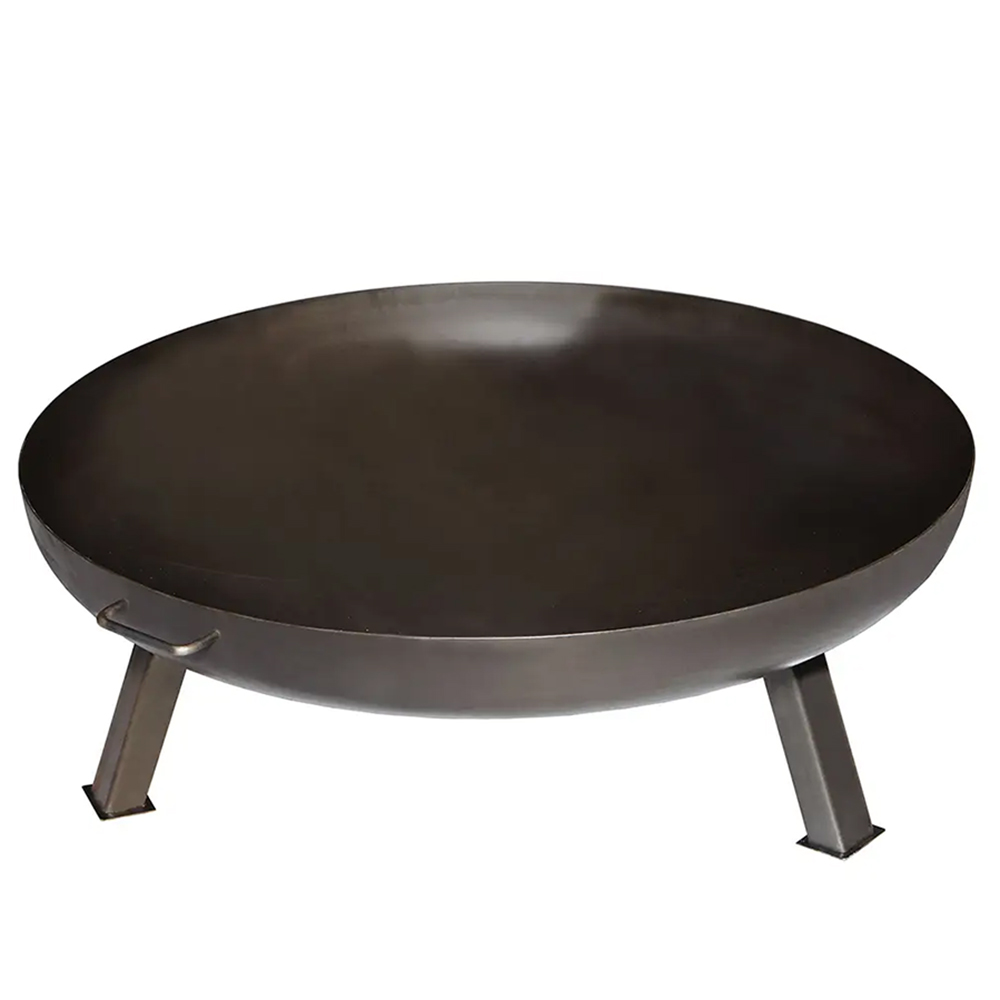
A 60cm bowl suits a patio, a courtyard or a small terrace, and comfortably warms three or four seated people. It is the size that gets lit on a Tuesday because it does not feel like an occasion. The Buschbeck Ifen Steel Fire Pit 60cm at £109.99 is the sensible entry point here, and for a garden where the fire pit is a nice addition rather than the centrepiece, it is usually enough.
The trade-off is fuel capacity. A 60cm bowl needs topping up more often across a long evening, and it will not hold a bed of embers as steadily as something larger. For a couple or a small family that is rarely a problem.
This is the range that suits a typical British back garden with a seating area. An 80cm bowl holds enough fuel to run for a full evening without constant attention, and throws enough heat for six or seven people. The Buschbeck Ifen Steel Fire Pit 80cm at £159.99 covers this well, and the Barbecook Jack 75 in pre-rusted Corten steel at £219 does the same job with a very different look.
If you are unsure between 60cm and 80cm and you have the space, take the larger one. Very few people regret the extra capacity, and the additional fuel cost per evening is smaller than the size difference suggests.
A metre-wide bowl is a landscape feature rather than an accessory. The Barbecook Jack 100cm in pre-rusted Corten at £279 holds a substantial fire and warms a large seated group, but it needs a garden that can carry it visually. In a small space it dominates, and the heat output becomes uncomfortable rather than welcome for anyone sitting close.
Both materials work. They age very differently, and the choice is as much aesthetic as practical.
Painted or coated steel, as used on the Ifen range, stays looking as it did when it arrived. It is the straightforward option, it costs less, and it suits a garden with a tidy, contemporary feel where a rusted object would look neglected rather than deliberate.
Corten steel is designed to rust, and that is the point. The surface oxidises into a stable, dense layer that then protects the metal beneath rather than eating into it, which is why the Barbecook Jack Corten Steel Fire Pit 60cm at £189 arrives already weathered. It will darken and settle over the first year or two, and it suits planted, informal gardens where that deepening colour reads as part of the landscape.
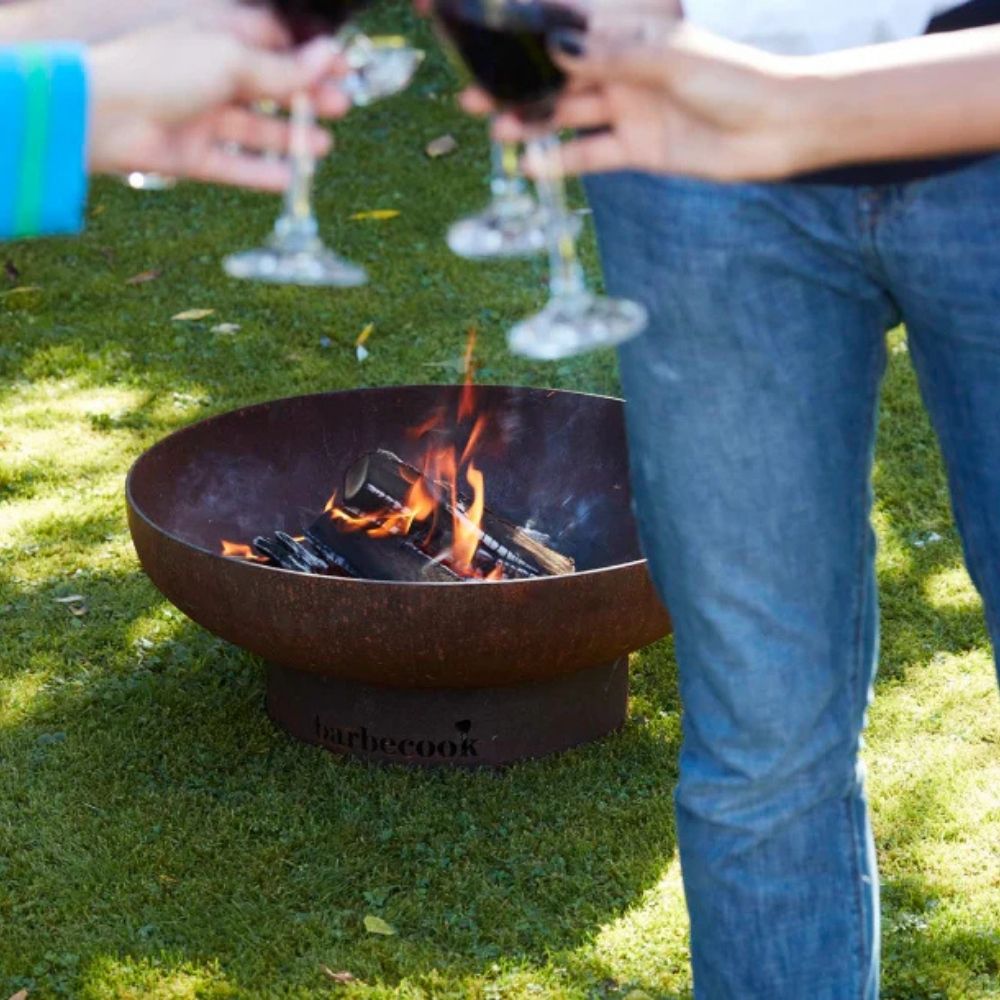
One practical note on Corten. During the early weathering period, run-off can stain pale paving. If the fire pit is going on light limestone or porcelain, stand it on a base or accept that some marking is likely.
Siting is where most fire pit problems begin, and nearly all of them are avoidable.
Keep a generous clearance from anything combustible. Fences, sheds, timber pergolas, garden furniture and overhanging branches all need real distance, not a token gap. Sparks travel further than people expect on a breezy evening, and an autumn hedge is drier than it looks.
The surface underneath matters as much as the space around it. Stone, concrete and gravel are fine. Decking is not, unless the fire pit sits on a proper base that lifts it clear and spreads the load. Lawn will scorch, and the bare patch lasts well into the following summer. A Barbecook Base for the Jack 60 and 75 at £129 solves this properly by raising the bowl and protecting what is underneath.
Think about prevailing wind before you commit. A fire pit positioned where the wind funnels between a house and a boundary wall will smoke people out no matter how good the fuel is. Sheltered but not enclosed is the target.
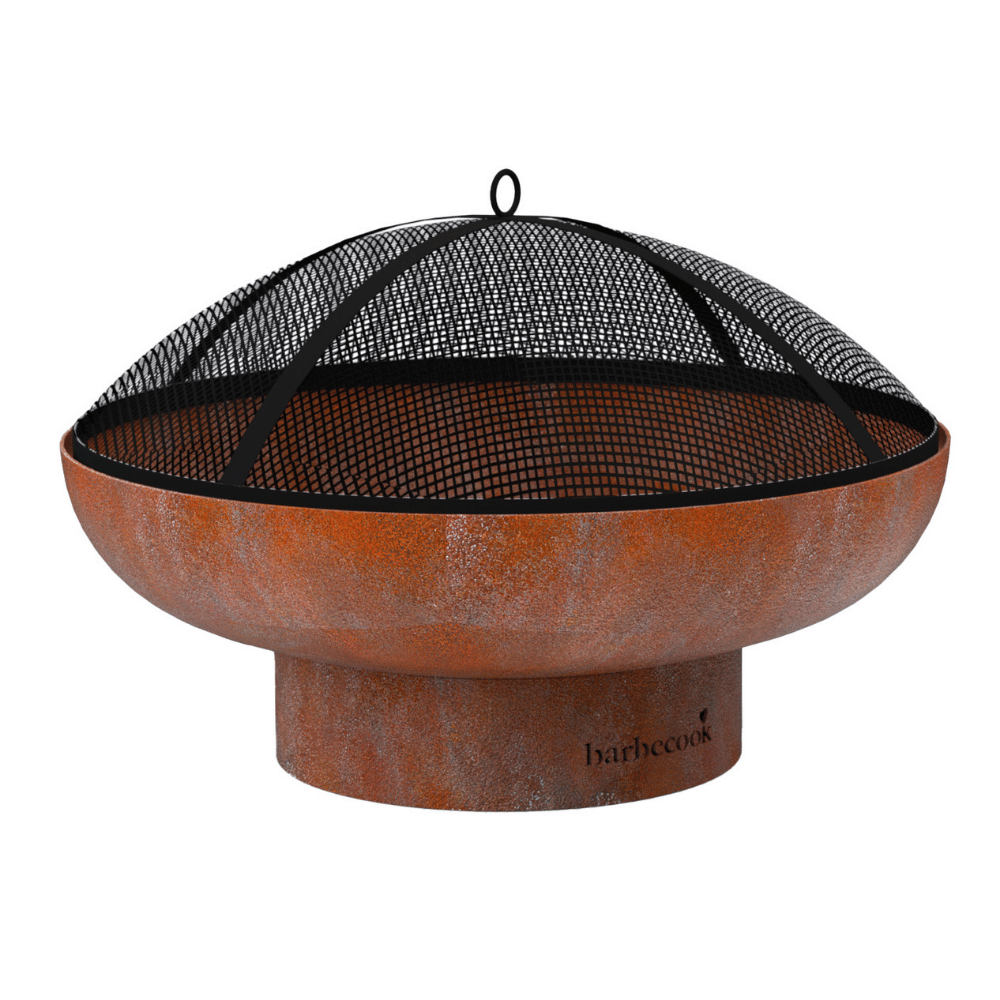
If the garden is used by children or if the fire pit sits near a walkway, a spark screen is worth having from the start rather than after an incident. The Barbecook Steel Spark Screen 62cm at £109 and the 75cm version at £129 fit their respective bowls and make a considerable difference on windy nights.
A fire pit that only produces heat gets used less than one that also produces dinner. This is where the accessories earn their money, and where a fire pit starts to replace the barbecue rather than sit alongside it.
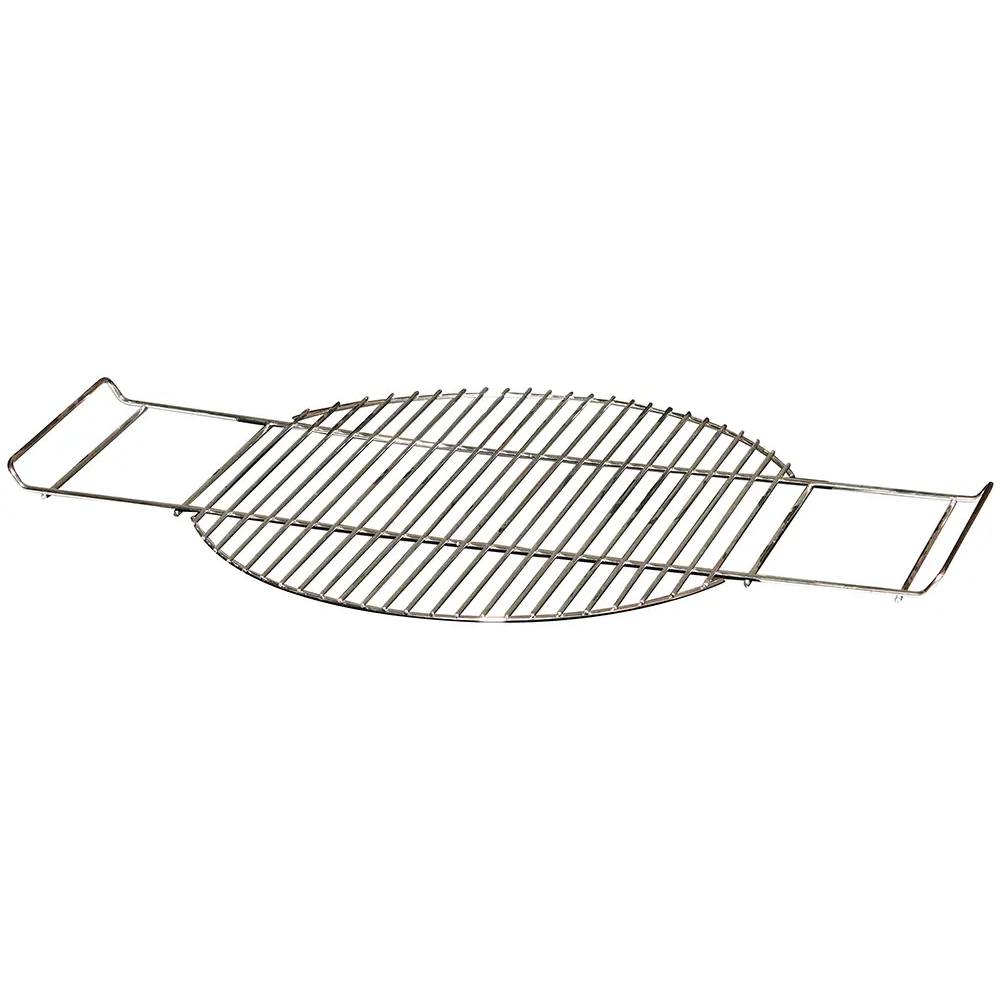
A cooking grill is the obvious first addition. The Buschbeck Heavy Duty Cooking Grill at £99.99 fits both the 60cm and 80cm bowls and turns the fire pit into a straightforward wood-fired grill. Cooking over an open fire is less forgiving than a gas barbecue, because you are managing a live fuel bed rather than a dial, but the flavour is better and the process is more interesting.
A plancha ring is the more versatile option. The Buschbeck Plancha Cooking Ring for 80cm fire pits at £169.99 gives you a solid heated surface around the edge of the bowl, with a hot zone near the flames and a cooler outer band. That means onions, peppers, flatbreads and eggs, none of which work over open bars, and it lets several people cook at once. For a 60cm bowl, the 60cm plancha ring at £129.99 does the same job.
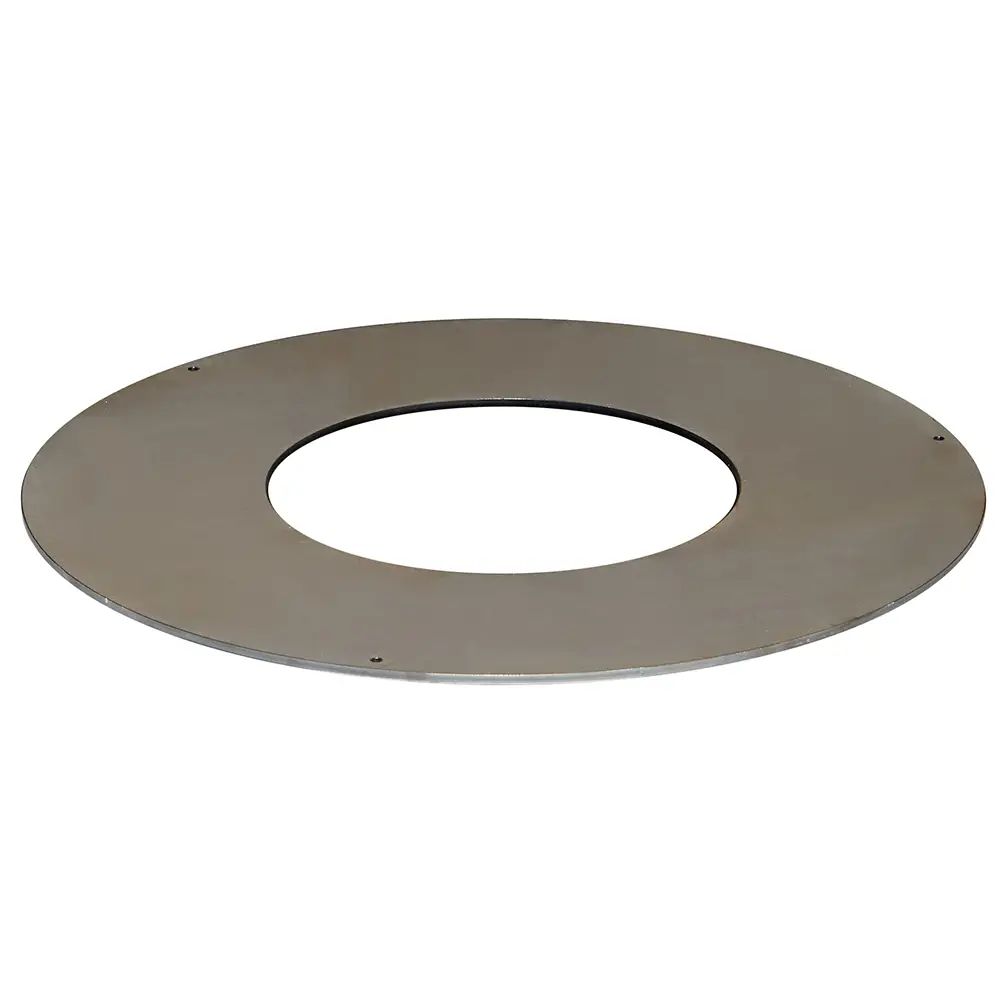
The plancha approach suits autumn entertaining particularly well, because everyone stays around the fire rather than gathering at a barbecue somewhere else in the garden.
Fuel is worth thinking about now rather than in October. Properly seasoned hardwood burns hotter, longer and far more cleanly than anything damp, and it produces a fraction of the smoke. Buy it before the autumn rush and store it somewhere dry and ventilated, off the ground and under cover but not sealed in plastic.
Do not burn treated timber, painted wood, pallets or garden waste. Beyond the smell and the smoke, treated timber releases genuinely unpleasant compounds, and it is not something to have drifting over a seated group.
Finally, plan for ash. A fire pit used regularly through autumn needs emptying every few burns, and cold ash is much easier to deal with than the alternative. Leaving a shallow layer in the base is fine and helps insulate the bowl, but a bowl full of wet ash over winter is what shortens the life of the steel.
The gardens that stay in use through October and November are rarely the biggest or the most expensively landscaped. They are the ones with somewhere warm to sit. A fire pit does that job more cheaply and more sociably than almost anything else, and unlike a patio heater it gives people something to gather around rather than merely stand beneath.
If you are choosing now, work back from how you actually spend evenings outside. A couple who want somewhere to sit with a drink after work needs something very different from a family who entertain at weekends. Get the size right for that, put it somewhere sheltered and safe, and add a cooking surface when you are ready. You can browse the full range of fire pits to compare sizes and finishes, or speak to us on 02476 474440 if you want a second opinion before you commit.
Fire pit accidents are almost never dramatic. They are scorched decking, a melted section of artificial grass, a fence panel
This question comes up most often just after someone has decided what they want and just before they spend the