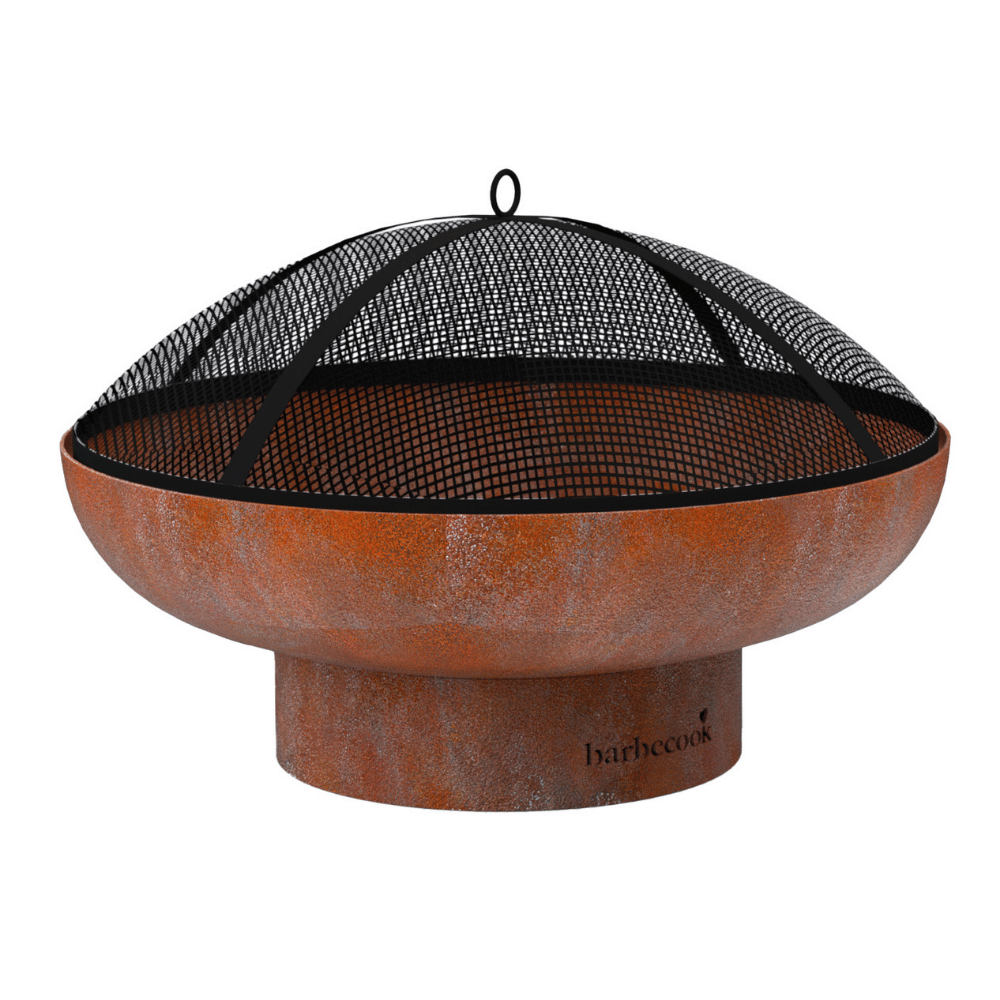
Fire Pit Safety: Siting, Surfaces and Sparks
Fire pit accidents are almost never dramatic. They are scorched decking, a melted section of artificial grass, a fence panel

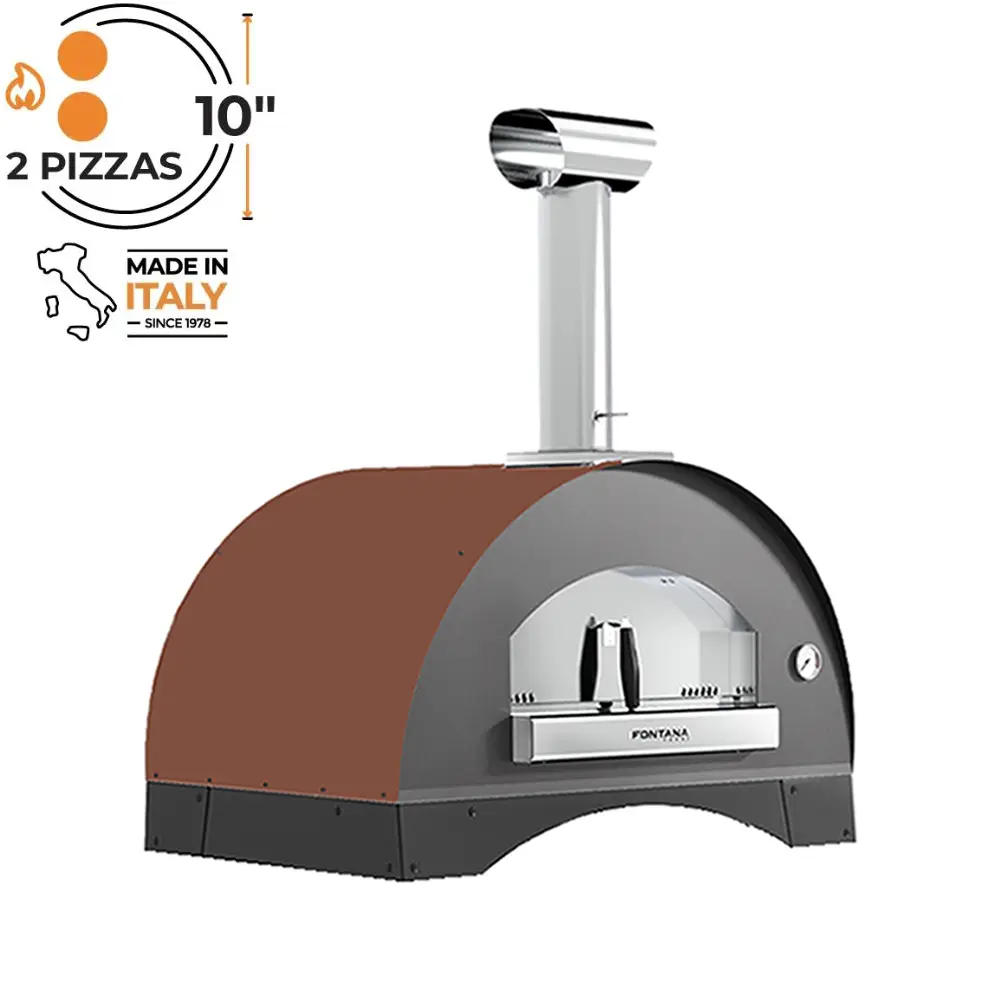
The oven is the part with a price tag on it, and it is regularly the smaller half of what a built-in pizza oven actually costs. That is not a criticism of anyone’s pricing. It is simply that a build-in oven is a bare body designed to be enclosed, and the enclosure is a building job with its own materials and labour.
This is a breakdown of where the money goes on a typical UK build, written so you can put a realistic figure on a project before committing to it rather than discovering the shape of it halfway through. Oven prices here are ours and current. Building costs vary considerably by region, access and specification, so treat those as budgeting ranges rather than quotes.
This is the one number you can pin down precisely, and across the wood-fired build-in range it runs from around £705 to £2,719.
At the entry point, the Fontana Lorenzo Build In is £705 at the time of writing, down from a regular £1,319, which suits a compact kitchen and family cooking. The Margherita Build In at £1,579 and the Mangiafuoco Build In at £2,209 cover most outdoor kitchens. At the top, the Marinara Build In is £2,469, rising to £2,719 for the stainless steel version.
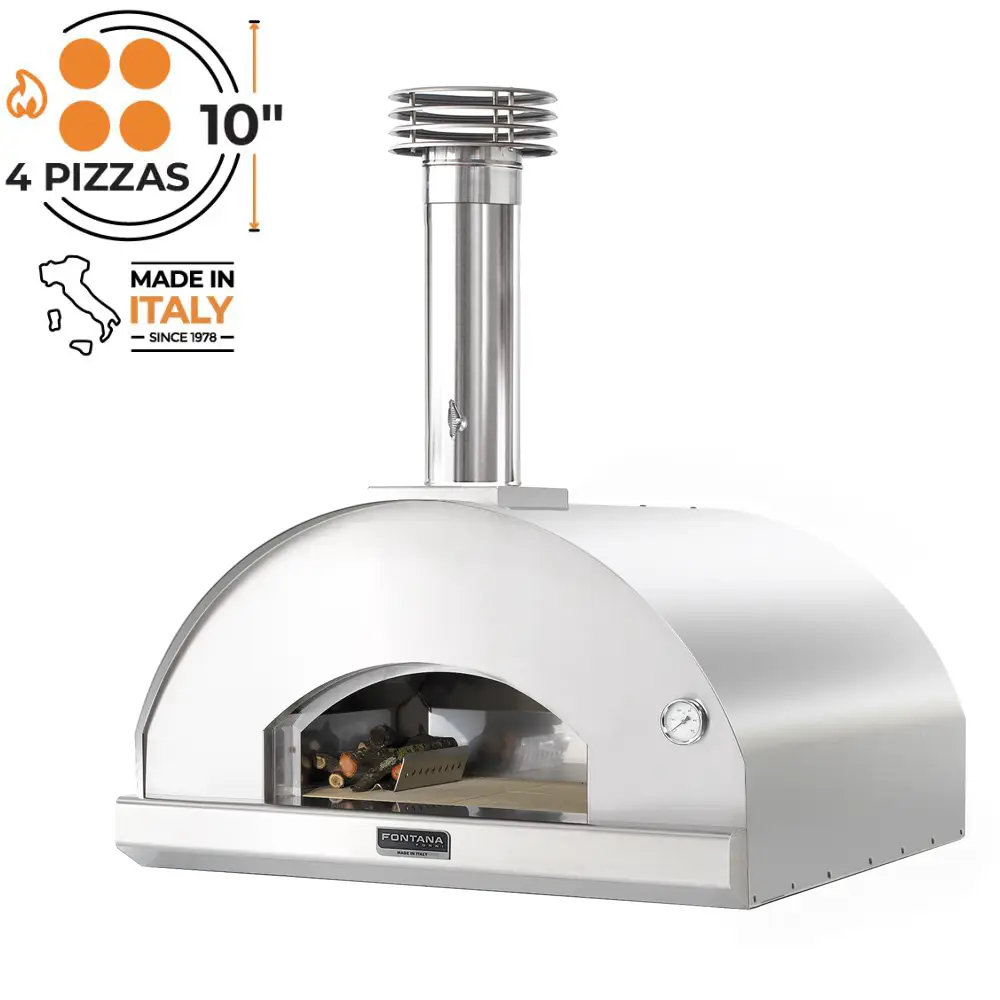
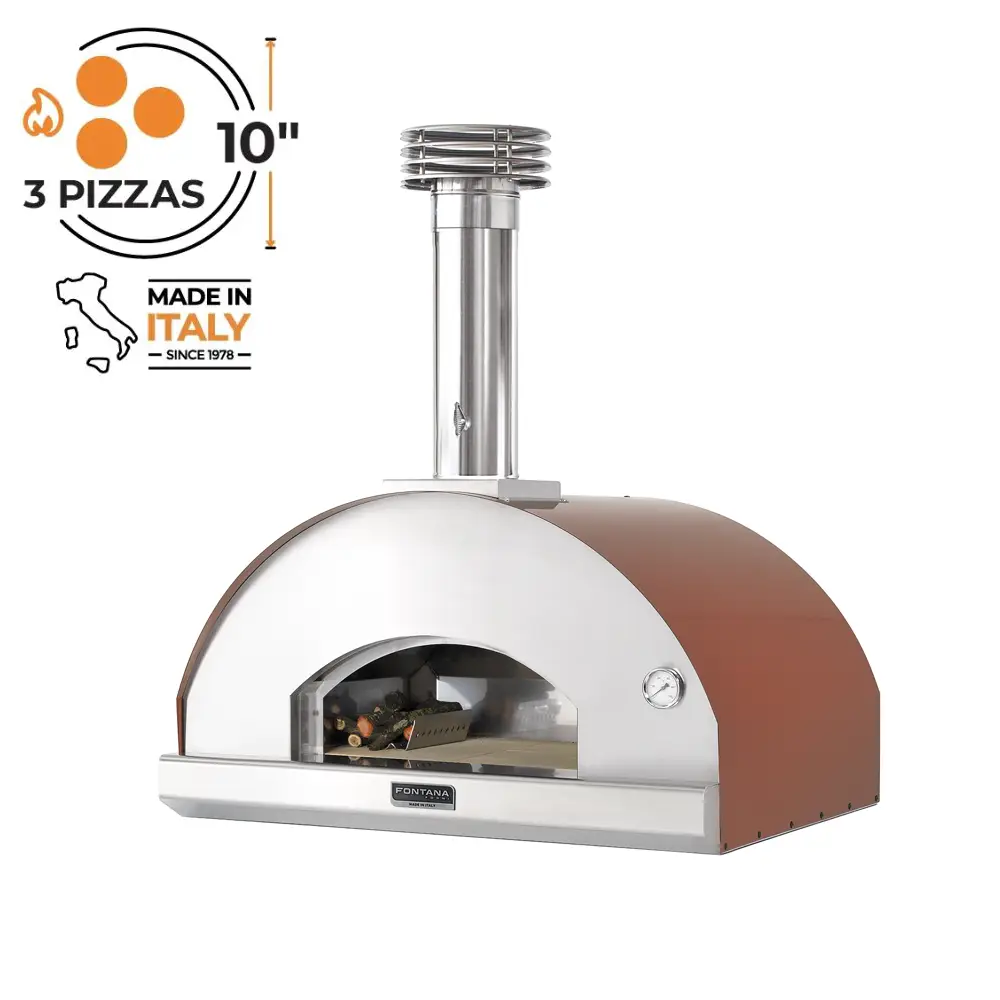
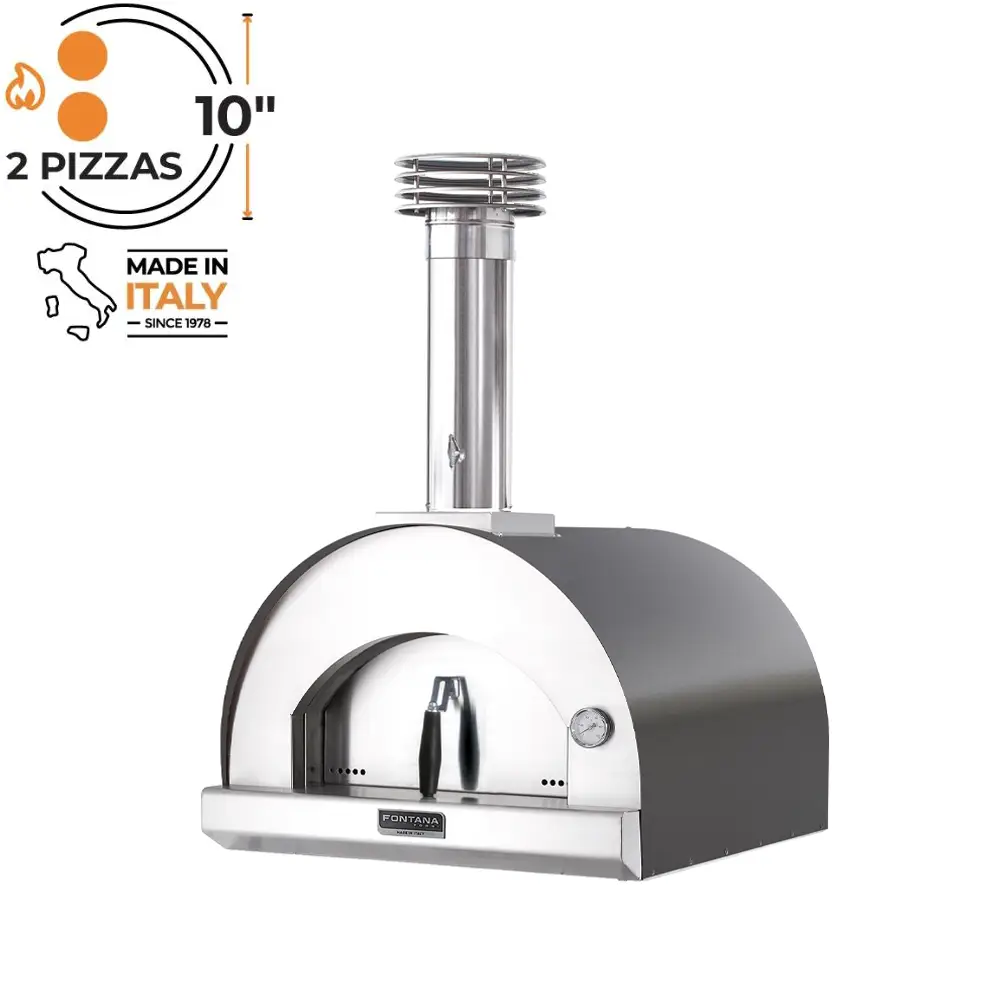
If you want gas as well as wood, dual fuel adds meaningfully to the figure. The Margherita Countertop Dual Fuel at £2,349 gives a sense of the step up, and it is a decision to make before building rather than after, because routing a gas supply into finished masonry is awkward and expensive.
Everything sits on this and it is not the place to economise. A built oven, its enclosure, insulation and a stone worktop together represent a serious load, considerably more than a barbecue trolley.
An existing patio slab is sometimes adequate and frequently is not. If there is any doubt, a properly specified reinforced concrete pad is the honest answer, and on most projects that means excavation, hardcore, formwork, mesh and a pour. Budget in the low hundreds if you are building on an existing sound slab, and considerably more if a new foundation is needed or if access for materials is poor.
Access is the hidden variable here. A garden reachable only through the house, or down a narrow side passage, changes the labour figure on every subsequent line as well.
The enclosure is usually built in blockwork or a steel frame with a board system, then finished. The materials themselves are not expensive relative to the rest of the project. The labour is the cost.
This is where the design complexity shows up in the price. A straightforward rectangular enclosure with the oven at worktop height is a manageable job. An L-shaped kitchen with integrated storage, a chimney breast and a wood store built into the structure is a considerably longer one, and the difference between those two is measured in days rather than hours.
This is the line people cut and should not. An uninsulated or under-insulated enclosure means longer heat-up times, more wood burned every session, worse heat retention through a cook, and an outer structure that gets uncomfortably hot.
Proper insulation board and blanket around the oven body, to the manufacturer’s specification, is a few hundred pounds of material on a typical build. Skipping it saves that once and costs you in wood and in cooking performance every single time you light the oven for the next fifteen years.
Follow the stated clearances rather than building as tight as the space allows. Those figures exist for both performance and safety reasons.
The flue takes smoke clear of the cooking position and of anywhere people sit. Getting it wrong makes the space unpleasant to use, and it is not something you can adjust easily afterwards.
Cost depends almost entirely on height and routing. A short straight run is inexpensive. A flue that has to clear a pergola, a roof overhang or a neighbouring boundary needs more sections, more support and more labour, and it is worth resolving on paper before anything is built.
If the oven sits under any kind of cover, the flue design becomes the critical detail of the whole project rather than an afterthought.
This is the most elastic line in the budget and the one that most affects how the finished thing looks.
Render and paint is the economical route and looks perfectly good. Brick or stone cladding costs more and reads as more permanent. Porcelain or granite worktops sit at the upper end, natural stone higher again. The range between a rendered finish with a concrete worktop and a stone-clad build with granite is easily a few thousand pounds on the same underlying structure.
Worth knowing: the worktop material also has to cope with heat and weather at the same time. Some attractive indoor materials do not enjoy either.
On most builds this is the largest single line, ahead of the oven. A competent builder or landscaper working for several days to a week, plus any specialist trades, adds up quickly.
Two specific trades are worth budgeting separately. If the design includes gas, a Gas Safe registered engineer is required for the fixed installation. If it includes lighting, sockets or an outdoor fridge, an electrician is required for the outdoor-rated circuit. Neither is optional and both need designing in early.
As a broad guide for budgeting rather than a quote, a simple build around an entry-level oven on an existing sound base, with a rendered finish, typically lands somewhere in the low thousands all in. A full outdoor kitchen with a mid-range oven, new foundations, cladding, a stone worktop and integrated storage is a considerably larger number, often several times the oven price.
The useful rule of thumb is to assume the oven will be somewhere between a third and a half of the finished cost. If that total is beyond the budget, a countertop or trolley oven delivers the same cooking for the oven price alone and requires no building at all. That is a legitimate answer rather than a lesser one.
Rarely on the oven, because that price is visible from the start. Almost always on three things.
Access, which inflates every labour line and is invisible until someone tries to get a mixer down the side of the house. Groundworks, when an existing slab turns out to be inadequate and a foundation has to be poured. And finish creep, where render becomes cladding and a concrete worktop becomes granite once the structure is up and looking good.
The failure mode is a finished oven in an unfinished enclosure because the money ran out at the worktop, which is both the most common and the most avoidable outcome.
Price the whole project before ordering the oven, not after. Decide wood-fired or dual fuel before construction. Confirm the base is adequate before anything else is specified. Resolve the flue route on paper. Then choose the largest oven that fits comfortably within the design and the remaining budget.
You can browse the Fontana Forni wood-fired range and the wider outdoor kitchen range to see where the oven figure lands for your build. If you want to sanity check a plan before committing, call us on 02476 474440. Talking it through at the design stage costs nothing and it is a much better time to find a problem than once the blockwork is up.
Fire pit accidents are almost never dramatic. They are scorched decking, a melted section of artificial grass, a fence panel
This question comes up most often just after someone has decided what they want and just before they spend the