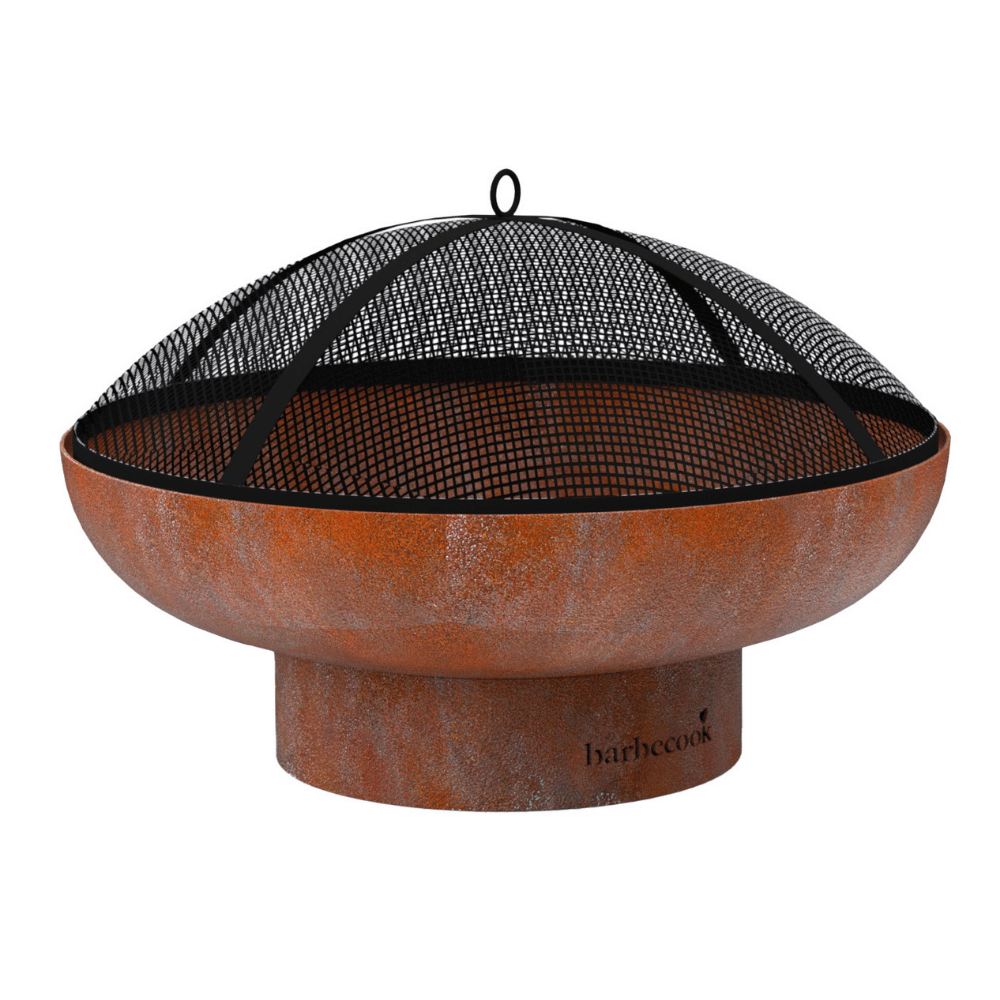
Fire Pit Safety: Siting, Surfaces and Sparks
Fire pit accidents are almost never dramatic. They are scorched decking, a melted section of artificial grass, a fence panel


Pizza is the best food to cook for a crowd and the easiest to get wrong when there is a crowd watching. The oven that makes a superb pizza for two is often the oven that makes twelve people wait forty minutes, and that is a different failure from a bad pizza but guests notice it more.
Choosing a pizza oven for entertaining is a throughput problem rather than a quality problem. Almost any decent oven reaches the temperature required. What separates them is what happens on the fourth pizza, and on the fourteenth.
Every oven in this category will reach 400C and above, and every one of them will cook a Neapolitan base in ninety seconds. Peak temperature is not the differentiator that spec sheets imply.
What matters is what a pizza does to the stone when it lands on it. A cold, wet base pulls heat straight out of the floor. On a small oven with a thin stone and limited thermal mass, that drop is significant and the next pizza goes onto a surface that is no longer hot enough. You either wait for it to recover or you serve a pale, soft base.
A larger chamber with more refractory mass absorbs that hit and returns to temperature faster, because there is more stored heat to draw on. That is the whole game when you are cooking for numbers, and it is why chamber size matters more than any headline figure.
Wood is the better cooking experience and produces the better result. That is not really in dispute. It also demands attention: feeding the fire, managing the bed, reading the flame, all while you are supposed to be hosting.
Gas removes that entirely. It holds a set temperature with no management, recovers predictably, and lets you cook forty pizzas without once thinking about fuel. For entertaining specifically, that reliability is worth more than the marginal flavour advantage of wood, because the failure mode of wood-firing under social pressure is a distracted cook and an inconsistent oven.
Fontana’s dual fuel ovens run both, which is the arrangement that actually suits most households: gas when you are feeding people and want to be present, wood when you are cooking for the pleasure of it. The Margherita Anthracite Countertop Dual Fuel at £2,349 is the entry to that range, and the Mangiafuoco Rosso Countertop Dual Fuel at £2,909 steps up to a larger chamber.

If you are confident with fire and would rather have the better cook, the wood-only equivalents cost less for the same chamber. The Margherita Build In at £1,579 is the same body without the burner.
Be honest about the normal case rather than the biggest party you can imagine.
For four to six people, a Margherita-sized chamber is entirely sufficient. You will cook steadily, nobody waits long, and the oven is not absurd for a Friday night when it is just the household.
For eight to twelve, move up to a Mangiafuoco. The extra chamber volume and mass is what keeps the pace up through a second and third round, and it is the difference between cooking alongside your guests and cooking instead of seeing them.
Beyond twelve, or if you host regularly and at scale, the Marinara is the size that stops being the bottleneck. The Marinara Rosso Build In at £2,469 is the wood-fired version, and the same body appears throughout the trolley and dual fuel range.
This matters more for hosting than it does for cooking.
A trolley oven can be positioned where the people are. That sounds trivial and is not, because a pizza oven is a spectacle and putting it at the edge of the gathering wastes half of what you bought. It also means you can move it out of the wind, or under cover when the weather turns mid-evening. The Margherita Rosso with trolley at £1,989 and the Mangiafuoco Rosso with trolley at £2,689 cover the two useful sizes.

A built-in oven is the better long-term answer if you already have or are planning an outdoor kitchen, because it comes with the thing a trolley lacks: worktop either side. Pizza production needs somewhere to stretch bases, somewhere to hold topped pizzas waiting to go in, and somewhere to land them coming out. Without that you end up carrying trays from the kitchen all evening.
If you are weighing up a permanent installation, our guide to built-in pizza ovens for outdoor kitchens covers the enclosure requirements, and the cost breakdown sets out what the whole project runs to rather than just the oven.
Not every household needs a two thousand pound oven, and it is worth saying so.
If you entertain a few times a year, cook for four or fewer, or want to find out whether you enjoy this before committing, a compact gas oven does the job. The Cozze 13″ Rotate Gas at £299 has a rotating stone, which is genuinely useful because it removes the main skill barrier of turning a pizza evenly. The Cozze 13″ Premium Rotate at £419 is the better-built version of the same idea.

The honest limitation is throughput. One pizza at a time, thirteen inches, with a real recovery pause between each. For a family that is fine. For fifteen guests it is a long evening for whoever is cooking.
Three things separate a smooth pizza evening from a chaotic one, and none of them is the oven.
Preparation space, first. You need roughly a metre of usable surface next to the oven, at a workable height. This is the single most common reason a pizza evening feels frantic.
Dough logistics, second. Dough needs to come up to room temperature and be portioned before guests arrive. A pizza oven cannot rescue cold, underproved dough, and no amount of money spent on the oven changes that.
Heat-up time, third. Plan on forty five minutes to an hour before the first pizza, not the fifteen minutes that portable oven marketing suggests. Larger chambers take longer precisely because of the mass that makes them good at throughput.
For four to six people and occasional entertaining, the Cozze 13″ Premium Rotate at £419 or a Margherita-sized Fontana depending on budget.
For eight to twelve and regular hosting, a Mangiafuoco Countertop Dual Fuel at £2,909 is the one I would point most people at. The chamber handles the pace, and gas means you are hosting rather than tending a fire.
For larger numbers or a permanent outdoor kitchen, a Marinara built in, with worktop either side and a gas burner if you want midweek use as well as weekend occasions.
You can compare the full range in our Fontana Forni collection. If you tell us roughly how many people you cook for and whether the oven is going into a build or standing free, we can narrow it quickly on 02476 474440.
Fire pit accidents are almost never dramatic. They are scorched decking, a melted section of artificial grass, a fence panel
This question comes up most often just after someone has decided what they want and just before they spend the