Fire Pit Safety: Siting, Surfaces and Sparks
Fire pit accidents are almost never dramatic. They are scorched decking, a melted section of artificial grass, a fence panel

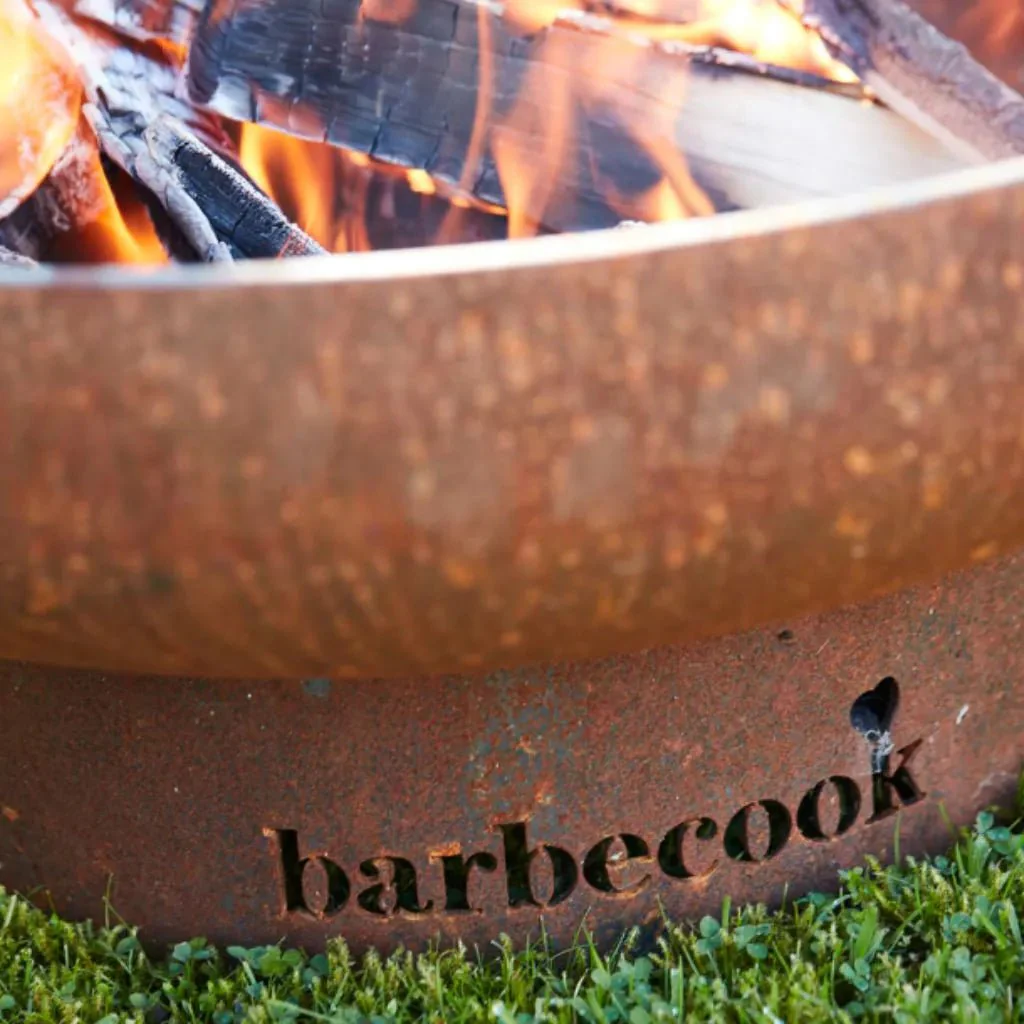
Corten fire pits raise the same question in almost every garden centre and showroom: why would anyone pay more for something that arrives already rusted? It is a fair thing to ask. Rust is what ruins garden furniture, gates and tools, so a product that has been deliberately encouraged to develop it looks like a defect being sold as a feature.
It is not. Corten is a specific family of steels engineered so that the corrosion works in the metal’s favour rather than against it, and understanding why explains both the price and the care it needs. Here is what actually happens to the surface, what to expect over the first two years, and where the material genuinely does have drawbacks.
Corten is a trade name that has become a general term, in the same way that Hoover did. The proper description is weathering steel, and it is a low-alloy structural steel containing small additions of copper, chromium, nickel and phosphorus.
Those additions are the whole point. In ordinary mild steel, rust forms as a loose, flaky oxide that traps moisture against the metal underneath. Water sits in it, corrosion continues beneath it, the flakes lift away and expose fresh metal, and the cycle repeats until the steel is eaten through. Rust on mild steel is progressive because it never forms a barrier.
In weathering steel, the alloying elements cause the oxide layer to form differently. It develops as a much finer, denser and more tightly adherent film that bonds to the metal rather than flaking off it. Once established, that layer substantially slows further oxygen and moisture reaching the steel below. The rust becomes the protection.
The process is self-limiting rather than permanent. Corrosion runs quickly at first while the patina establishes, then slows sharply as the layer becomes continuous and stable. After the first eighteen months to two years in a typical British climate, the rate drops to a small fraction of where it began.
The one condition that matters is wet and dry cycling. Weathering steel needs to get wet and then dry out properly for the patina to form correctly. That is not a problem in a British garden, where rain followed by drying is the default. It becomes a problem where water sits permanently against the surface, because a patina cannot stabilise under standing water.
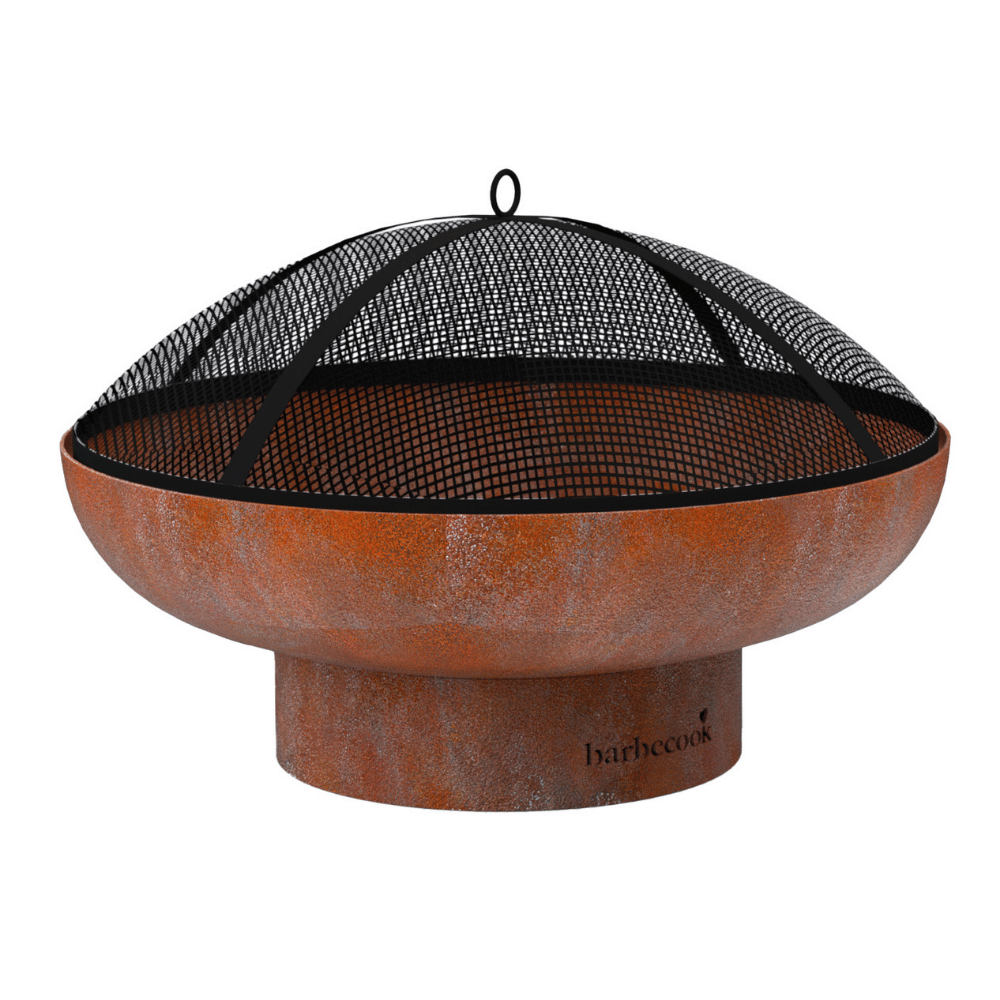
This is why drainage matters more than anything else with a Corten fire pit. A bowl that holds rainwater and wet ash through the winter is a bowl in permanently wet conditions, and that is the one situation where weathering steel corrodes much like ordinary steel. Fire pits such as the Barbecook Jack Corten Steel Fire Pit 60cm at £189 are designed with this in mind, but the owner still has to empty them.
Weathering steel can be sold raw, in which case it arrives grey and mill-finished and develops its colour over the following months, or pre-weathered, where the process has been started under controlled conditions before dispatch.
Pre-rusted products such as the Barbecook Jack 75 in pre-rusted Corten at £219 arrive with the orange-brown colour already present. This matters if the fire pit is going into a finished garden, because raw weathering steel goes through a genuinely unattractive patchy phase for the first few months, with uneven streaking as different faces weather at different rates depending on rain exposure.
Pre-weathered stock still changes. It continues to deepen from bright orange toward a darker chocolate brown over the first couple of years, and it will even out further as it goes. What you receive is a head start, not a finished state.
This is the drawback nobody mentions until it happens. During active weathering, rain running off Corten carries iron oxide with it, and that run-off stains porous surfaces.
Pale limestone, sandstone, porcelain and light concrete paving are all vulnerable. The marks are not always easy to remove once they have soaked in, and on a light patio the result can be a permanent orange halo around an otherwise handsome object. Gravel, dark paving, brick and planting are far more forgiving.
There are three sensible responses. Site the fire pit on gravel or a dark surface. Stand it on a base such as the Barbecook Base for the Jack 60 and 75 at £129, which lifts the bowl and controls where run-off lands. Or accept the marking as part of the look, which works in an informal garden but rarely on a new patio.
Staining is heaviest in the first year and reduces considerably as the patina stabilises, so this is a transitional problem rather than a permanent one. It is still worth planning around.
Painted and coated steel fire pits, such as the Buschbeck Ifen Steel Fire Pit 60cm at £109.99, are a different proposition rather than a lesser one.
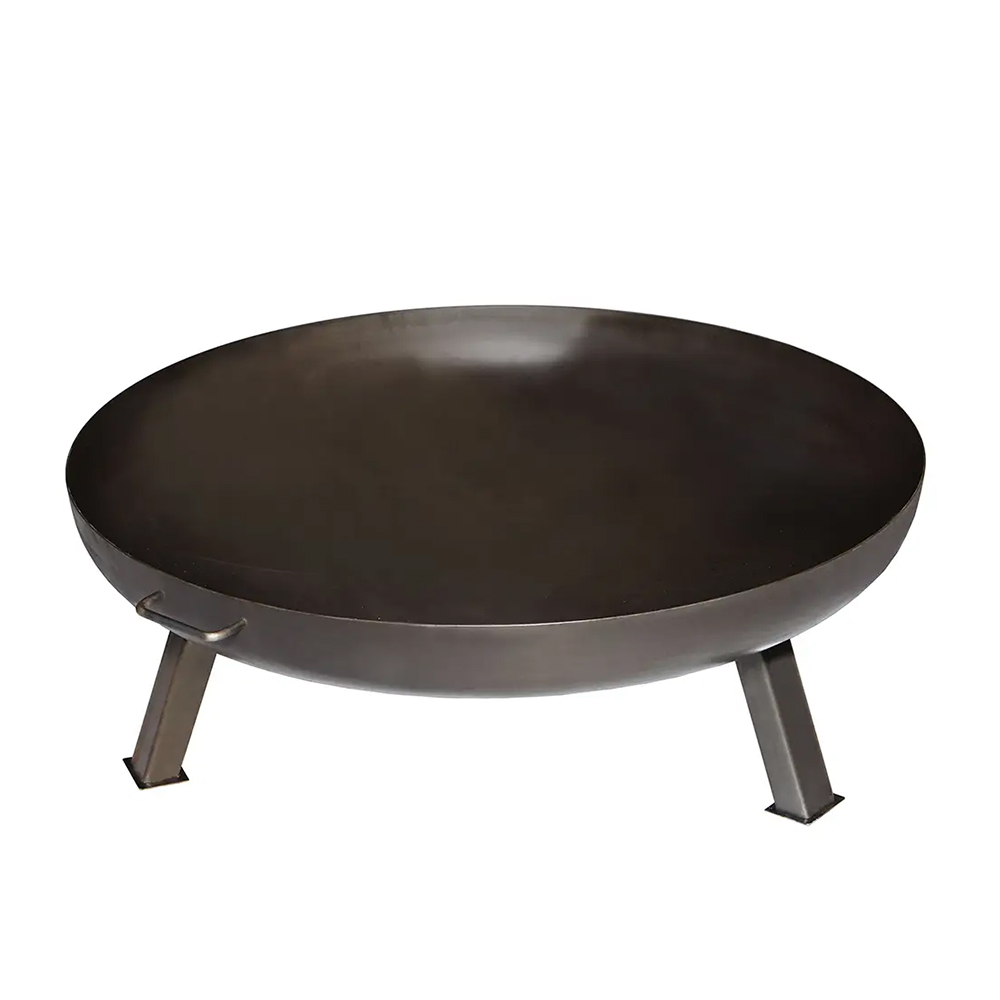
A coated pit looks the same in year five as in year one, provided the coating is intact. It does not stain paving. It costs less. Against that, any coating on a fire pit is being asked to survive repeated high heat, and coatings do eventually fail around the hottest zones. Once the coating is breached, ordinary steel underneath rusts in the ordinary progressive way, and touching it up is an annual job.
Corten has no coating to fail. Heat does not compromise it, because the patina is the finish. That is why weathering steel suits a product that is repeatedly taken to high temperature and left outdoors year-round, and it is the strongest practical argument for the premium.
The aesthetic question is separate and comes down to the garden. In a clipped, contemporary space with pale paving and architectural planting, a rusted object can look like something that has been forgotten. In a naturalistic garden with grasses, gravel and timber, it looks entirely at home and improves as it ages.
The care list is short, and most of it is about water rather than rust.
Empty ash regularly, and particularly before winter. Wet ash is both alkaline and moisture-retaining, which is an unhelpful combination against any steel, weathering or not. This single habit does more for the life of a Corten fire pit than anything else.
Check that drainage holes stay clear. A blocked drain turns a fire bowl into a water tank, and standing water is the one condition weathering steel genuinely dislikes.
Do not seal, oil, paint or wax it. Every one of those interferes with the wet and dry cycling the patina depends on, and the usual result is uneven weathering and trapped moisture. The instinct to protect it is understandable and counterproductive.
Do not scrub the patina back to bare metal either. If you want a cleaner appearance, a brush with plain water is enough. Wire brushing simply restarts the process and brings back the staining phase.
On a straight comparison, a Barbecook Jack 100cm in pre-rusted Corten at £279 sits well above a coated bowl of similar capacity. What the difference buys is a finish that cannot fail in the way a coating fails, and an object that looks better in ten years than it does on delivery.

If the fire pit lives outdoors permanently, gets used hard, and sits in a garden where a deepening brown reads as intentional, weathering steel is the better long-term buy. If it will be stored under cover, used occasionally, or placed on pale paving in a formal space, a coated steel pit is the more sensible choice and the saving is real.
Both are available across our fire pit range, and if you are weighing up a specific garden we are happy to talk it through on 02476 474440.
Fire pit accidents are almost never dramatic. They are scorched decking, a melted section of artificial grass, a fence panel
This question comes up most often just after someone has decided what they want and just before they spend the